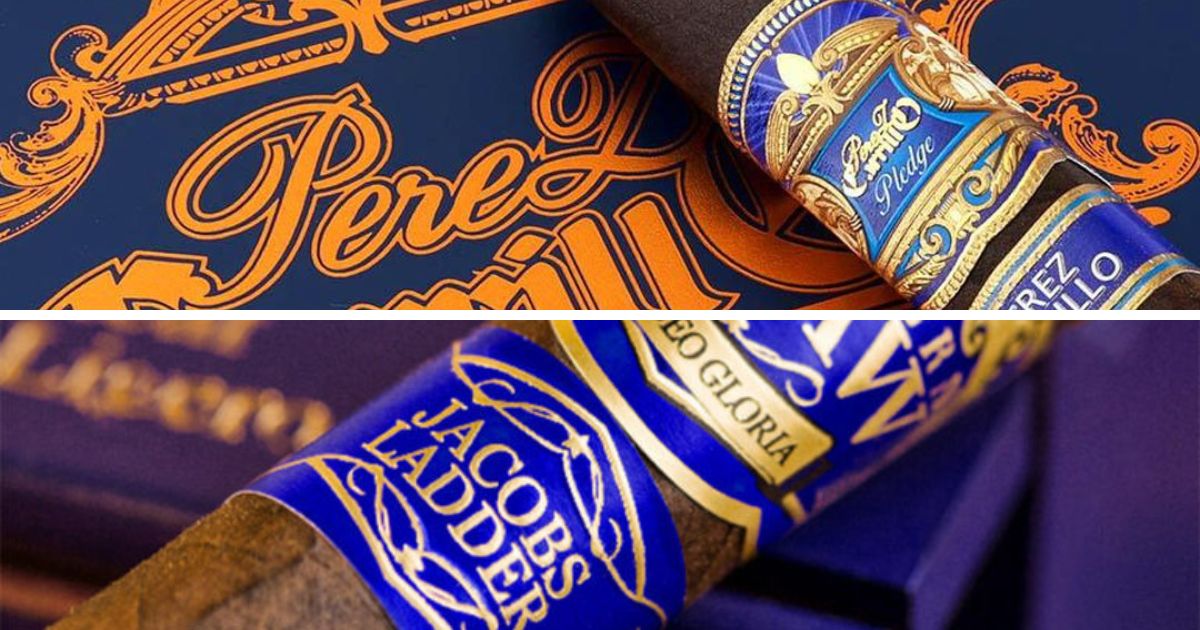
Southern Draw Jacob's Ladder wins, but barely. Both cigars hit hard, both deliver on the Connecticut Maduro promise, and both deserve shelf space. But when forced to pick one for regular rotation, Jacob's Ladder edges ahead on consistency and finish. The Pledge brings more complexity in the first half, then loses steam. Jacob's Ladder builds through all three acts and sticks the landing.
This is the first Cage Match, a new series where two cigars in the same weight class go head-to-head. Same format, same rules: smoke both back-to-back, pick a winner, explain why. No ties.
The setup: two maduro heavyweights
Both cigars wear Connecticut Maduro wrappers and promise full body without crossing into unsmokeable territory. Both are built by respected names: Southern Draw partnered with AJ Fernandez for Jacob's Ladder, E.P. Carrillo runs production at Tabacalera Alianza in the Dominican Republic.
Jacob's Ladder uses Pennsylvania Broadleaf over an Ecuadorian binder and Nicaraguan filler. The vitola tested here: 5.5" x 54 robusto. Full body, medium strength, which sounds contradictory until you smoke it. The body comes from richness, not nicotine.
The Pledge wraps Connecticut Maduro over Ecuadorian binder and Nicaraguan filler. Toro format, 6" x 52. Marketed as a bridge cigar for newer smokers stepping into full-bodied territory, but it punches harder than that pitch suggests.
Both cost roughly the same per stick. Both show up in enthusiast rotations. Both get recommended when someone asks for a "strong Connecticut." Time to see which one actually deserves the spot.
First third: The Pledge comes out swinging
The Pledge opens with more complexity. Right off the light: cocoa, black pepper, a woody backbone that reads as cedar but darker. The draw is perfect, smoke production is immediate, and the first few puffs taste expensive. There's a creaminess underneath the spice that keeps it from being one-note aggression.
Jacob's Ladder starts slower. The cold draw hints at leather and earth, but the first few puffs are muted compared to The Pledge. It takes until the halfway point of the first third for the flavors to settle into focus: dark chocolate, espresso, a slight sweetness that might be molasses. The pepper is there but restrained.
The Pledge wins the first third on intensity alone. Jacob's Ladder is still waking up.
If you're judging on first impressions, The Pledge looks like the winner. It delivers immediately. Jacob's Ladder asks for patience.
Middle third: Jacob's Ladder finds its rhythm
This is where the fight shifts. The Pledge maintains its core profile but doesn't evolve much past the first act. Same cocoa, same pepper, same woody baseline. It's consistent, which is a strength, but there's no escalation. The creaminess fades slightly, leaving the spice more exposed.
Jacob's Ladder, meanwhile, starts layering. The espresso note deepens, the sweetness becomes more pronounced, and a new element shows up: roasted nuts, maybe almond. The retrohale carries white pepper without overwhelming the palate. The cigar is building toward something instead of holding a single note.
Construction on both is flawless. No touch-ups, no uneven burns, no draw issues. Both cigars are well-made. This comes down to flavor development, not build quality.
Final third: Jacob's Ladder closes strong
The Pledge doesn't fall apart in the final third, but it does flatten. The flavors that were sharp and distinct in the first half blur together. The finish gets slightly bitter, not enough to ruin the experience but enough to notice. It's still smokeable to the nub, but the last inch doesn't reward you for sticking around.
Jacob's Ladder finishes clean. The sweetness holds, the espresso note stays rich, and the pepper ramps up just enough to keep it interesting without turning harsh. The final inch is as good as the middle third, maybe better. No bitterness, no muddiness, no reason to put it down early.
At $11 a stick, Jacob's Ladder earns another smoke.
That's the deciding factor. Both cigars cost about the same. Both are well-constructed. But only one makes you want to immediately smoke another.
The retailer angle: what moves
Both cigars sell. The Pledge has name recognition and a marketing pitch that works: "full-bodied but approachable." That's an easy sell to someone stepping up from milder smokes. Jacob's Ladder has a story (the three-name origin) and the AJ Fernandez co-sign, which carries weight with experienced smokers.
In practice, The Pledge moves faster with newer customers. Jacob's Ladder moves with the regulars who've already tried it once and came back. If you're stocking both, The Pledge is the easier first sale. Jacob's Ladder is the repeat business.
Bottom line: Jacob's Ladder, but smoke both
This was close enough that the verdict could flip depending on mood. If you want immediate impact and complexity right off the light, grab The Pledge. If you want a cigar that rewards patience and finishes strong, Jacob's Ladder is the move.
For regular rotation, Jacob's Ladder wins on consistency and finish. The Pledge is a solid cigar, but it peaks early. Jacob's Ladder builds through all three thirds and doesn't quit.
Both deserve a spot in the humidor. But if you're only buying one box, make it Jacob's Ladder in the 5.5" x 54. It's the more complete cigar.